Subterranean termite defense in Natrona County requires continuous liquid soil boundaries capable of withstanding the freeze-thaw shifts of central Wyoming. Reticulitermes flavipes subterranean termites nest below the…
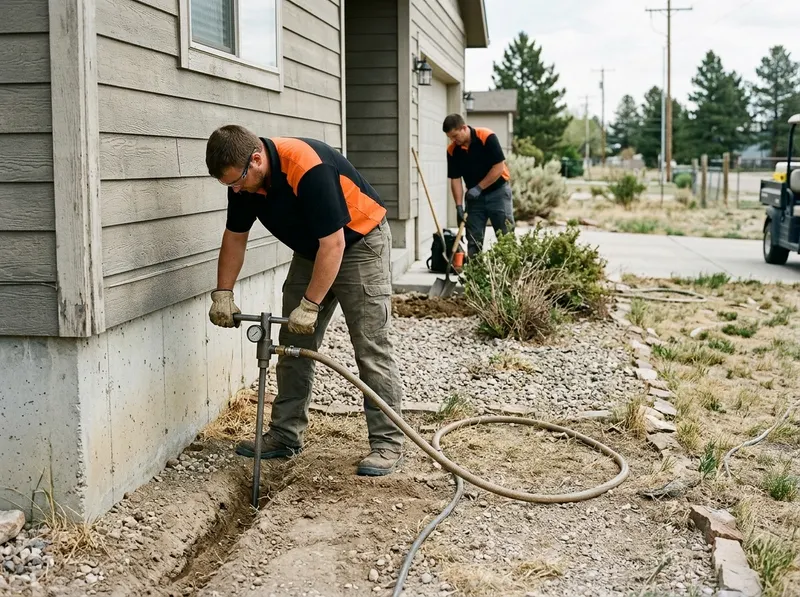
Subterranean termite defense in Natrona County requires continuous liquid soil boundaries capable of withstanding the freeze-thaw shifts of central Wyoming. Reticulitermes flavipes subterranean termites nest below the frost line, which reaches depths of 40 to 48 inches in Casper, and enter structural mudsills through microscopic cracks in poured foundations, block voids, and plumbing penetrations. Foundation footings set along the Casper Mountain foothills and the alluvial soils near the North Platte River Park experience persistent subterranean moisture, accelerating exploratory tunneling. Trenching and liquid rodding saturate the exterior structural perimeter at an application rate of four finished gallons per ten linear feet per foot of depth, bonding the agent to sub-grade gravels and loams so foragers pass through undetected and spread the compound through social grooming.
A continuous chemical barrier matches structures with confirmed perimeter dirt contact, while monitored baiting stations suit properties bordered by dense sandstone outcroppings or unsealed decorative flagstone where trenching is structurally impractical. Trenching provides immediate structural isolation, whereas bait systems rely on discovery cycles that can require 60 to 90 days during cold-climate slowdowns. For homes in Wolf Creek, Centennial Hills, and Mountain View with attached patio slabs or basement additions, concrete slab drilling at 12-inch centers injects termiticide into the sub-slab gravel base without disturbing indoor living quarters.
Properties across Paradise Valley, Bar Nunn, and the Kelly Walsh area with dirt crawlspaces require dual-perimeter treatment: treating the inside foundation perimeter and trenching around every supporting pier block alongside the exterior perimeter. This method prevents subterranean colonies from avoiding outdoor boundaries by tunneling directly up interior utility chases. The installation process follows three discrete steps: first, mechanical trenching of a 6-inch-wide by 6-inch-deep trench tight against foundation masonry; second, calibrated pressure-injection through sub-soil rods into the underlying footing; third, backfilling the excavated soil while blending it with termiticide to leave zero unprotected voids.
Every job gets a firm, written price after a free on-site visit.
Tell us about your subterranean termite treatment and soil barriers job in Casper and we'll send a clear, written quote, usually the same day.
 Zeltrona Pest Defense