Residential rodent and wildlife exclusion operates on physical defense rather than temporary baiting. In Casper, extreme seasonal transitions along the Casper Mountain foothills and the North Platte River corridor…
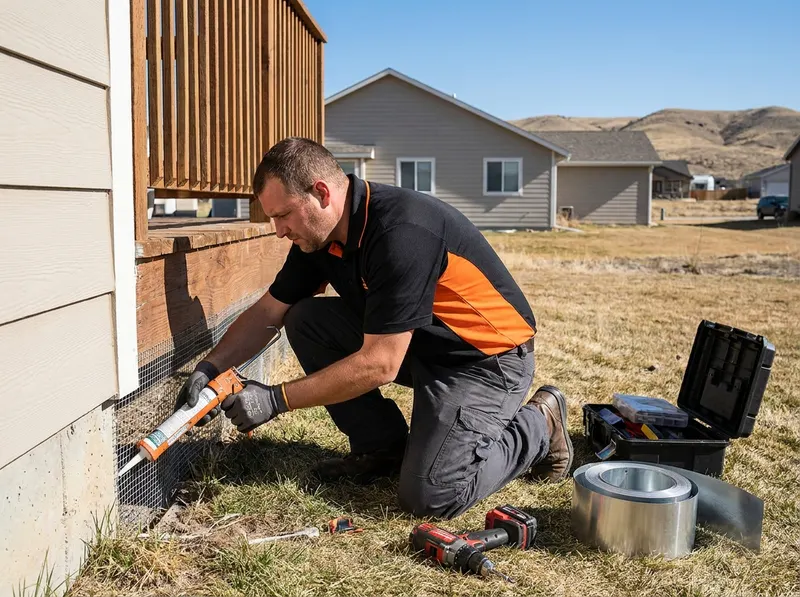
Residential rodent and wildlife exclusion operates on physical defense rather than temporary baiting. In Casper, extreme seasonal transitions along the Casper Mountain foothills and the North Platte River corridor force deer mice, pack rats, and raccoons into heated building envelopes. When ambient temperatures drop below zero degrees Fahrenheit, rodents exploit foundation voids as narrow as 1/4 inch and wildlife forces open loose soffit corners. Traps and chemical baits reduce inside populations temporarily, but without physical barrier installation, outside scent trails continually draw new pests through unsealed gaps. Exclusion establishes non-chemical architectural containment that withstands sustained Natrona County wind gusts exceeding 50 miles per hour.
Technicians execute a decisive, step-by-step structural closure sequence. First, an unyielding perimeter inspection maps every opening along the foundation, siding transitions, crawlspace access points, and fascia boards. Second, workers install 19-gauge or 1/4-inch galvanized steel mesh backed by heavy aluminum flashing and elastomeric sealants that rodents cannot gnaw through. Third, existing exterior vents, attic fans, and chimney caps receive custom-fitted steel covers. Fourth, targeted mechanical traps are placed inside the conditioned space to capture any remaining animals trapped within the sealed boundary. This multi-stage process ensures zero re-entry while leaving child- and pet-accessible living areas free of rodenticide baits.
Selecting structural exclusion over recurring poison programs represents a trade-off between upfront investment and permanent security. While recurring broadcast sprays or bait boxes involve smaller per-visit outlays, they fail to halt ongoing building degradation or gnawed electrical wiring. Structural exclusion requires an initial layout starting at the $250 service minimum, yet it eliminates recurring monthly poison contracts. For properties in Wolf Creek, Paradise Valley, Mountain View, and Big Horn Terrace, where riverbed cover supports high native wildlife populations, rigid hardware cloth installations prevent long-term attic insulation contamination. Properties in Centennial Hills and Sunrise benefit from reinforced roofline flashing designed to stop wind-driven animal intrusions.
Every job gets a firm, written price after a free on-site visit.
Tell us about your residential rodent and wildlife exclusion job in Casper and we'll send a clear, written quote, usually the same day.
 Zeltrona Pest Defense